
🖼️ Click for high-resolution zoom
ART-ID: 20004 ✓ In stock
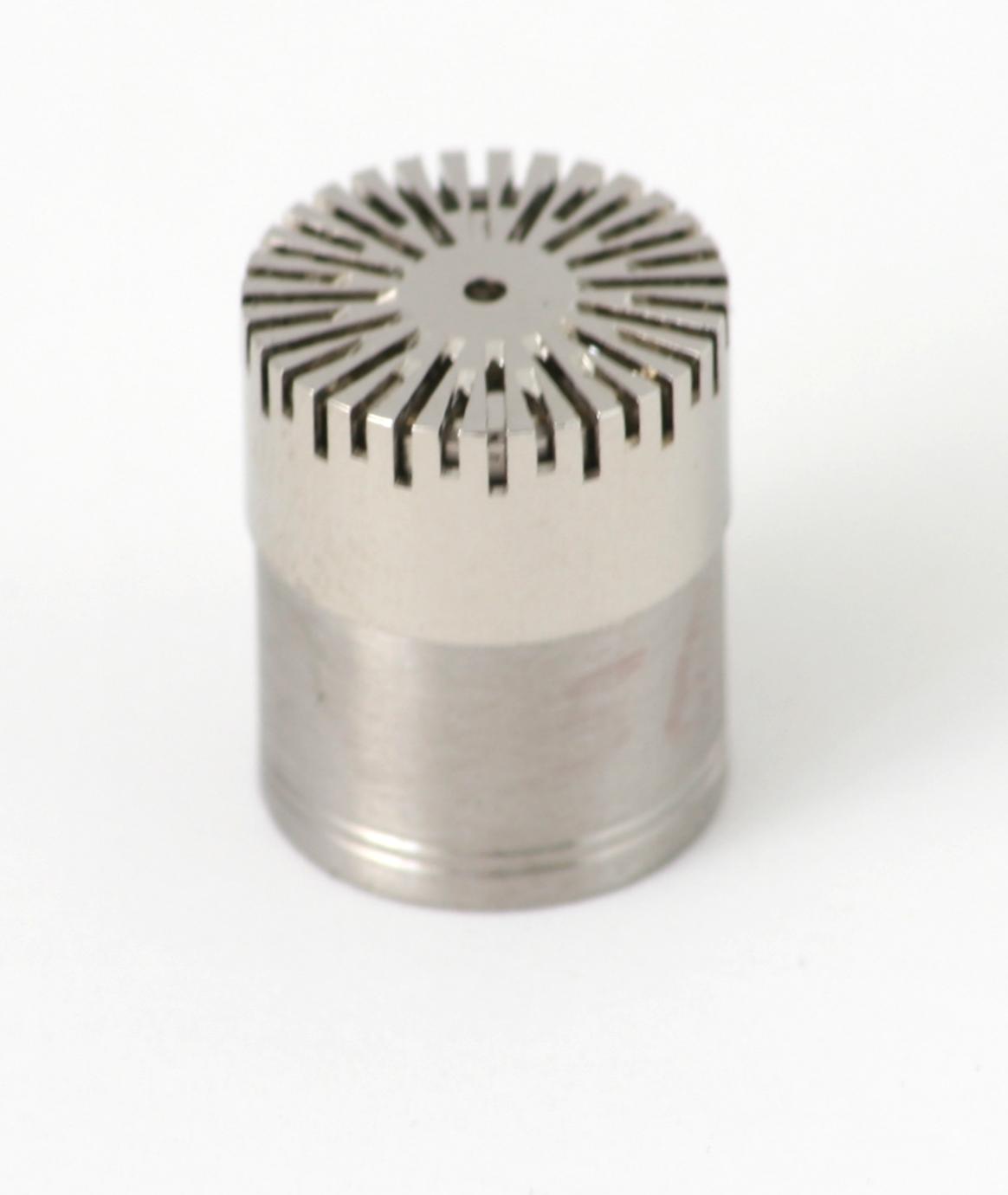
Rental 1/2” Measuring Microphone DJD class 1
1/2” Measuring Microphone DJD class 1 with 48V power supply via XLR
Price
Gross Net
€47.60
inkl. 19% gesetzl. MwSt.
€40.00
excl. 19% VAT (€47.60 incl. VAT)
🛒 Order Directly in Shop
i
✉️ Email ℹ️ Why B2B Catalog & Webshop Are Separated
This portal is our technical B2B catalog: designed to configure complex measurement chains and generate formal PDF quotations for procurement departments or internal approvals. Our catalog is mapped 1:1 to our webshop—if you prefer to order quickly and directly without a quotation step, this button takes you straight to this exact product in our shop.
Technical Specifications
Pre-polarized 1/2" Microphones IEC 651 class 1
Measurement microphones can be divided in two groups
Measurement microphones from the musician area
The type of microphone use a cheap 1/4" electret capsule. The overall design looks like a 1/2" microphone, but this is just the housing. Therefore these microphones typically fit to 1/2" calibrators. The most widely used microphone in this area is the ECM8000 from Behringer, which is suitable for most of the measurements especially room acoustics. In this group there are also high quality with very linear frequency response e.g. the MB30 from Earthworks.
These microphones are connected with a XLR interface. They require a phantom power of 12-48V. The can be connected to many soundcards directly.
Due to the small diaphragm area, they have a small sensitivity. Typically you can measure above 30dB, only. Measurements at very quiet devices are limited by the internal noise.
Classical measurement microphones
For sophisticated measurements classical measurement microphones are required. Such a system contains a capsule (1/8"-1"), a pre-amplifier and a supply unit. The capsule thread is specified (60 UNS) and components can be changed between different manufacturers. The capsules are optimized for different applications (frequency response, noise level, peak sound pressure). Typical manufacturers are Bruel&Kjaer, G.R.A.S., Microtech Gefell etc. . The price range starts from 1400 Euro.
Pre-polarized 1/2" Microphones
Many measurements in the area of loudness (Sone, ISO 532B or the simple A weighted level) at low noise devices e.g. PC, laptop, beamer, ventilation require a lower measurement limit of 20dB. None of the musician measurement microphones can be used in this area. The classical measurement microphones are significantly more expensive. Up to now, there was a gap for measuring low noise levels economically.
With our own brand name we offer a class of measurements microphones, which are much more sophisticated than any musician measurement microphones. It's price in the range of top musician measurement microphones but significantly less than classical measurement microphones.
The system contains a 1/2" capsule (thread 60UNS) and integrated pre-amplifier. The frequency response conforms to IEC651 class 1. They are directly connected to soundcards with XLR cables without expensive supply units. Normal phantom power with 48V is sufficient. The total set-up is much easier than classical measurement microphones.
We offer this microphone in two versions:
Type 1: low noise, sound level 17-148dB, frequency range 20-20kHz, sensitivity 50mV/Pa
Type 2: broadband 20-40kHz, high level range 25-160dB, sensitivity 12mV/Pa
Shared specification:
1/2-inch pre-polarized
Fulfills IEC60651-class 1
Omnidirectional
Connection via XLR
Requires phantom power 48V
Capsule thread 60UNS
Size: Length 165mm, Diameter capsule 13.2mm, pre-amplifier 19mm
Listening tests
You can easily compare these different classes of microphones with a short recording.
We compare the ECM8000 (1/4" capsule) and DJD Type 1 (1/2" capsule). Microphone distance is 1m from a weak sound source from a loudspeaker. Both microphones are connected to the same pre-amplifier (M-Audio mobile pre). We adjusted the gain for the same level. Due to the low sound level noise occur and is intended. You can easily hear the difference. The ECM800 has a much higher noise floor of 12-15dB. Behringer ECM8000 https://www.dr-jordan-design.de/Download/ECM8000.mp3 1/2" Measurement microphone DJD Type 1 https://www.dr-jordan-design.de/Download/DJD_3x1.mp3
You can easily see the differnce from the construction of the capsule
The left mic is our DJD Typ1 without protection grid. This allows watching the sensitive diaphragma directly.
The right mic shows a ECM 8000. It's head basically allows connecting calibrators directly. The core capsule is much smaller. The diamater of the diaphragma is just 4.5mm compared to 10.5mm. Therefor the effective area is more than 4 times smaller.