USB Measurement Microphones for PC & Smartphone: From Pre-Calibrated UMIK-2 to 200V Reference Systems (ATD5-T & MV240)
Modern USB measurement microphones integrate 7 previously separate components (capsule, impedance converter, preamp, attenuator, ADC, voltage converter, and USB interface) into a single compact housing. Discover why combining them with Akulap (including Akulap Mobile for Android and Windows) and a sound level calibrator creates a complete IEC 61672 and ISO 3382 laboratory.
1. Which USB Microphone Fits Your Task?
Direct benchmark across 5 classes: Budget 6533 vs. UMIK-1 vs. calibrated UMIK-2 vs. ATD5-T vs. Gefell MV240.
2. Why a Sound Calibrator Is Mandatory
The dBFS paradox: Interactive simulator proves why absolute sound pressure level requires 94.0 dB calibration.
3. Circuit Teardown: Dual-ADC & 28 Vpp
UMIK-1 vs UMIK-2 teardown, 1 kHz USB noise FFT forensics, and tool-free USB-C strain relief.
4. Rent USB Microphones or Lab Calibration
Weekly rental from 25 € with 100% buyback credit, or APx555 calibration for your existing mic.
The Definitive USB Microphone Benchmark: From Budget Entry to 200V Metrology Reference
Beyond marketing buzzwords, we benchmark the 5 practical system tiers across measurable engineering specs: capsule diameter, maximum input voltage, ADC architecture, and self-noise.
| Specification | 1. Budget Class 2 (Art. 6533) | 2. MiniDSP UMIK-1 | 3. Calibrated UMIK-2 (Akulap) | 4. Modular ATD5-T (Art. 6510) | 5. High-End Gefell MV240 |
|---|---|---|---|---|---|
| Capsule & Thread | 1/2" Kapsel Klasse 2 | Feste 1/4" Elektret-Kapsel (12 mm) | Austauschbare 1/2" Kapsel (60UNS) | Modular 1/2" (60UNS, Klasse 1/2) | Modular 1/2" (60UNS, 0V & 200V LEMO) |
| ADC & Sample Rate | 24-Bit / 48 kHz | 24-Bit / 48 kHz (PCM1863) | 32-Bit / 192 kHz (TLV320ADC5140) | Dual-ADC (40 dB Versatz), bis 90/192 kHz | Dual-ADC (40 dB Versatz), Referenzklasse |
| Max. Input Voltage | 500 mV RMS (5V USB) | 500 mV RMS (5V USB) | 500 mV RMS (5V USB) | 10 V RMS (28 Vpp via DC/DC-Wandler) | 10 V RMS (28 Vpp + 200V Polarisation) |
| Typical Self-Noise | ~19 dB(A) | ~30–34 dB(A) | ~18–20 dB(A) | ~15 dB(A) (mit 50 mV/Pa Kapsel) | 7 dB(A) elektrisch (~14 dB(A) akustisch) |
| Akulap Integration | Dongle im Mikrofon integriert | Kompatibel (Dongle separat) | Im Labor einzelkalibriert | Nativ unterstützt (ASIO/WDM) | Volle Labor-Präzision am PC |
| Recommended Use | Preiswerter Einstieg für Akulap & Baustelle | Heimkino (REW), Dirac & HiFi-Setup | Unser Preis-Leistungs-Favorit für Akustiker | Profi-Messungen 15–143 dB ohne Umschaltung | PTB/Klasse-1 Gutachter & R&D-Prüfstände |
⚡ Interactive Dynamic Range & Clipping Simulator: Why 5V USB Fails at High SPL
Compare what happens at various sound pressure levels (from 20 dB whisper to 140 dB concert). Standard USB mics power the ADC directly from the 5V bus and clip at 500 mV RMS (~114–120 dB SPL). The ATD5-T and MV240 generate 10 V RMS (28 Vpp) via internal DC/DC converters to capture the entire dynamic range without clipping.
The dBFS Paradox: Why a Sound Level Calibrator (94.0 dB) Is Essential
A USB microphone initially outputs only relative digital integers in dBFS. Without an actively regulated acoustic reference (1.00 Pascal @ 1,000 Hz), no software can determine whether −18 dBFS represents a jackhammer or a pin drop.
Every USB measurement microphone registers as an OS audio input. Windows, macOS, and Linux provide a digital input gain slider. If this slider is altered by an OS update, a conferencing app (Zoom, Teams), or accidental user adjustment, the digital gain changes – corrupting every uncalibrated reading!
A supplied .cal file only equalizes the relative frequency response (e.g. +1.5 dB at 12 kHz), but never anchors the absolute acoustic sound pressure level in the room.
The IEC 60942 solution: Mount an actively regulated 94.0 dB sound calibrator (such as Center 326 Art. 7002) before every measurement. Akulap aligns the chain in one click – immune to OS gain changes or cable lengths.
Adjusting the OS input volume shifts uncalibrated readings by the exact same amount!
Standard calibrators feature a 1/2-inch aperture (13.2 mm). 1/2" microphones such as UMIK-2, ATD5-T, and MV240 slide directly into the cavity without adapters. The UMIK-1 and 1/4" microphones (~12 mm body) strictly require a precision adapter (Art. 7150 / 7157) to prevent acoustic leakage and erroneous calibration levels.
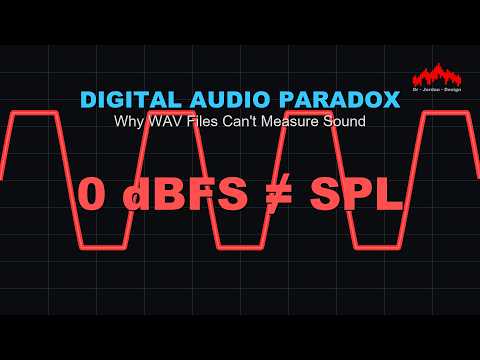
The Digital Audio Paradox: Why WAV Files Can't Measure Sound
Why digital audio files (dBFS) cannot measure true sound pressure without an acoustic reference.
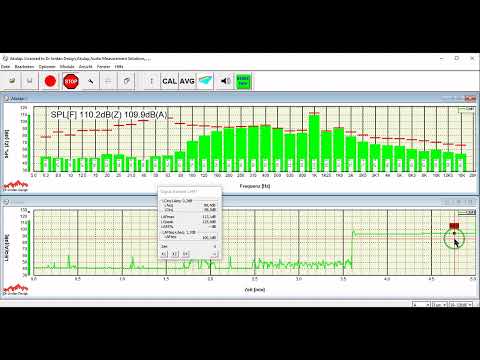
Calibrating Akulap with a Sound Level Calibrator
Step-by-step masterclass: 1-click level calibration in Akulap using Center 326.
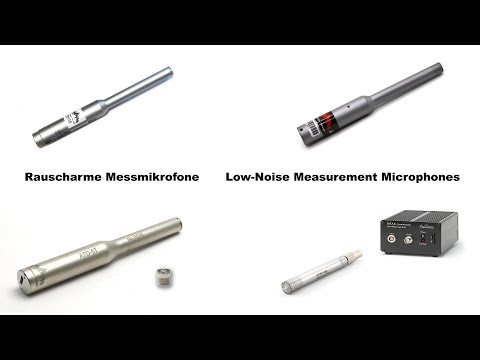
Lab Deep Dive: Circuit Teardown, 1 kHz Chirping & USB-C Protection
We disassembled the most popular USB measurement microphones in our Dresden lab and benchmarked them on our Audio Precision APx555.
PCB Benchmark: UMIK-1 vs. UMIK-2
- ▸ UMIK-1: Analog DIP switches for gain (0–36 dB), 24-bit PCM1863 ADC, fixed 1/4" capsule.
- ▸ UMIK-2: XMOS XUF208 controller, 32-bit/192-kHz TLV320ADC5140, modular 1/2" capsule (60UNS thread).
- ▸ Lab findings: UMIK-2 offers ~12 dB lower noise floor and native 1/2" calibrator fit.
The 1 kHz USB Chirping Trap
- ▸ USB Full Speed transfers audio in 1 ms frames (1,000 Hz). In budget mics, this burst couples into the preamplifier.
- ▸ FFT spectra reveal sharp spikes at 1 kHz, 2 kHz, and 3 kHz – right in the zone of maximum human hearing sensitivity.
- ▸ ATD5-T and MV240 eliminate this via discrete LC filtering, ground isolation, and fully shielded LEMO connectors.
Tool-Free USB-C Strain Relief (Cable Protection)
- ▸ Delicate SMD USB-C jacks on the internal PCB tear off immediately when someone trips over the cable – total economic loss!
- ▸ Our CNC-manufactured strain relief (Art. UMIK1KS / UMIK2KS) snaps onto the mic body without tools.
- ▸ Tensile and bending forces transfer directly to the rugged metal body – preserving the USB-C jack.
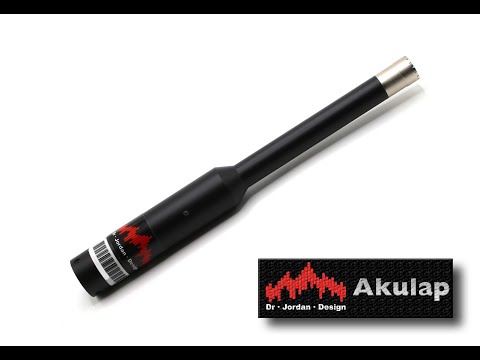
3-Way Configurator: From Calibrated UMIK-2 to 200V Class 1 System
All prices loaded dynamically at build time with 100% PAngV compliance from our master catalog.
Calibrated UMIK-2 & Protection
Ideal for Akulap, Akulap Mobile, REW, and room acoustics. Includes individual lab test and strain protection.
High-End Dual-ADC & Akulap
10 V RMS (28 Vpp) DC/DC converters for 15–143 dB without gain switching, plus modular Akulap software suite.
Sound Level Calibrators (IEC 60942)
Actively regulated acoustic references at 94.0 dB (1.00 Pa) for absolute, tamper-proof level calibration.
Rent USB Measurement Microphones & Environmental Kits (from 1 Week)
Test first, decide later: 100% of your first week's rental fee is credited towards purchase!
rent a USB measurement Microphone MiniDSP UMIK 2 192kHz
USB measurement Microphone MiniDSP UMIK 2.
Rental USB measurement Microphone MiniDSP UMIK 1
USB measurement Microphone MiniDSP UMIK 1 for rent
Rental 1/2” Measuring Microphone DJD class 1 with calibration certificate
1/2” Measuring Microphone DJD class 1 with 48V power supply via XLR with calibration certificate
Rental Complete Audio Measurement System for environmental mesurements
complete Audio measurement system including USB measurement microphone and software for environmental mesurements
Rental Center 326
Rental Sound level calibrator class 2
Frequently Asked Questions About USB Microphones
Why do I need a 94 dB sound calibrator even if my USB microphone includes a .cal file? ▼
The .cal file only equalizes relative frequency deviations (bass and treble roll-off), but gives the PC zero data on absolute room sound pressure. Because operating systems (Windows, macOS) or communication apps can silently adjust the USB recording slider, uncalibrated software displays pure guesswork. Only mounting a 94.0 dB calibrator (Center 326) anchors the chain to exactly 1.00 Pascal.
What are the core differences between UMIK-1, calibrated UMIK-2, ATD5-T, and Gefell MV240? ▼
UMIK-1 features a fixed 1/4" capsule with ~32 dB(A) noise floor and 5V USB power (great for home theater). UMIK-2 features a modular 1/2" capsule with ~18 dB(A) self-noise, 32-bit ADC, and native 1/2" calibrator fit. The modular ATD5-T adds a Dual-ADC with 40 dB offset and DC/DC converters for 10 V RMS (28 Vpp) headroom (15–143 dB without range switching). Microtech Gefell MV240 is the ultimate Class 1 reference with switchable 200V polarization for precision LEMO laboratory capsules.
Can I have my existing USB mic calibrated in your Dresden lab or rent a system before buying? ▼
Yes, absolutely! Via our factory calibration service (Art. S102), we measure your existing USB microphone (UMIK-1, UMIK-2, ATD5-T, or third-party) on our Audio Precision APx555 and Spektra pressure chamber from 31.5 Hz to 20 kHz. Alternatively, rent UMIK-1, UMIK-2, or full environmental kits from 1 week – with 100% of the first week's rental credited upon purchase.
How long can the USB cable be and what causes 1 kHz chirping in cheap USB microphones? ▼
Standard passive USB cables are specified up to 5 m. With active USB repeaters or USB-over-CAT5 extenders, our systems reliably operate over distances up to 60 meters without signal loss. The 1 kHz chirping in cheap single-chip mics stems from 1 ms USB packet transients coupling into unshielded analog circuits. Professional systems like the ATD5-T and MV240 employ multi-stage LC filters and shielded metal enclosures that eliminate bus noise entirely.